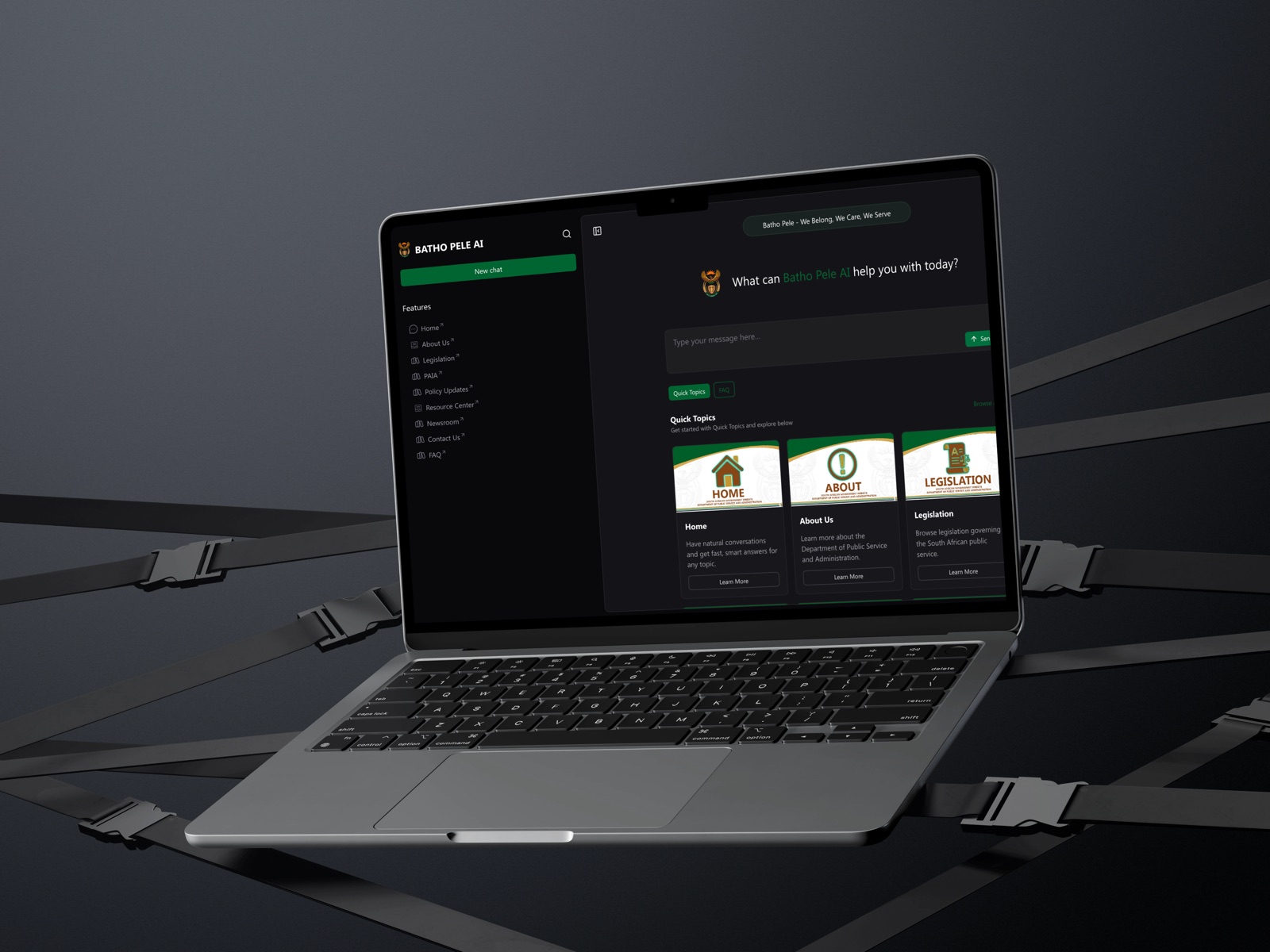
Screen
DPSA Assistant — Batho Pele AI · Home
An AI knowledge assistant that turns a sprawling library of policies, frameworks, and public records into instant, sourced answers — for staff and the public alike.
The Department of Public Service and Administration holds a sprawling library of policies, frameworks, and public records — spread across a website and hundreds of PDFs, each with its own structure, its own formatting, its own way of burying the answer someone actually needed. Finding a single clause meant knowing which document to open before you could even start searching it.
The brief was to turn that fragmented library into one searchable body of knowledge, accessible through a single conversational interface — for internal staff and members of the public alike. And because this was government information, the bar wasn't "usually right." A wrong answer was never an acceptable risk, so trust had to be designed in, not bolted on.
"Treat every policy, framework, and record as one searchable body of knowledge — and make it trustworthy enough that a wrong answer is never an acceptable risk."
Before designing a single conversation, we mapped where the knowledge actually lived. Policy information was scattered across the department's website and hundreds of PDFs — frameworks, circulars, guidelines — each with its own layout, its own headings, its own inconsistent way of expressing the same rule. Treating that as "one knowledge base" meant solving a structural problem before it could become a conversational one.
We also had to design for two very different audiences reading from the same source: staff who needed precise, technical answers to do their jobs, and members of the public who needed the same information in plain language — both with zero tolerance for an answer that sounded confident but was wrong.
"An answer that's fast but wrong is worse than no answer at all — grounding comes before generation."Digital Resolve · AI trust principles, DPSA engagement
We built a retrieval-augmented generation pipeline on Llama that treats every policy, framework, and public record as part of one searchable knowledge base. Instead of generating an answer from memory, the assistant retrieves the relevant source passages first, then composes a response grounded in what it actually found.
Every response carries a visible confidence & accuracy indicator, so staff and members of the public alike can see how much to trust an answer before acting on it — turning "the assistant said so" into "here's exactly where that came from."

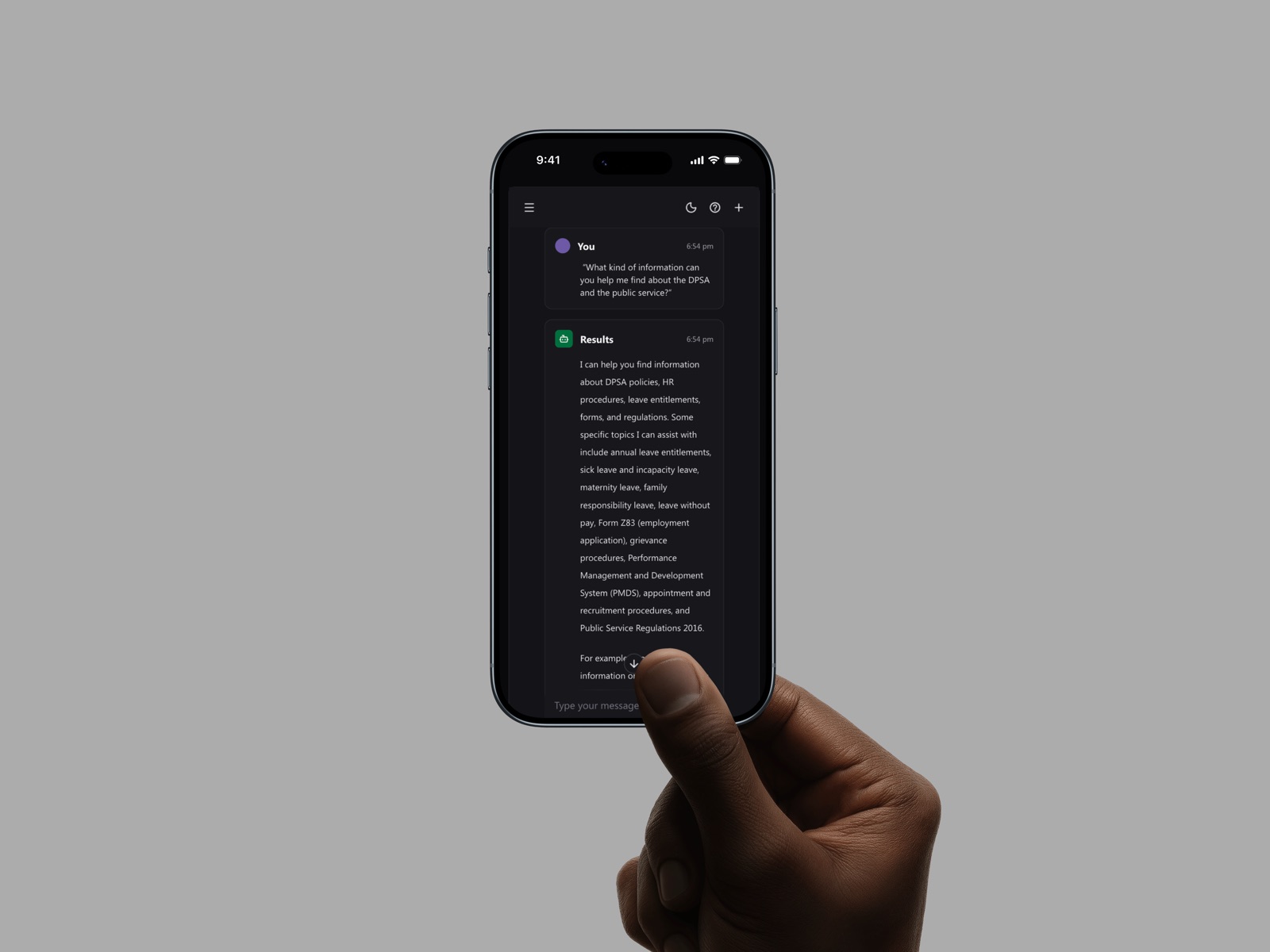
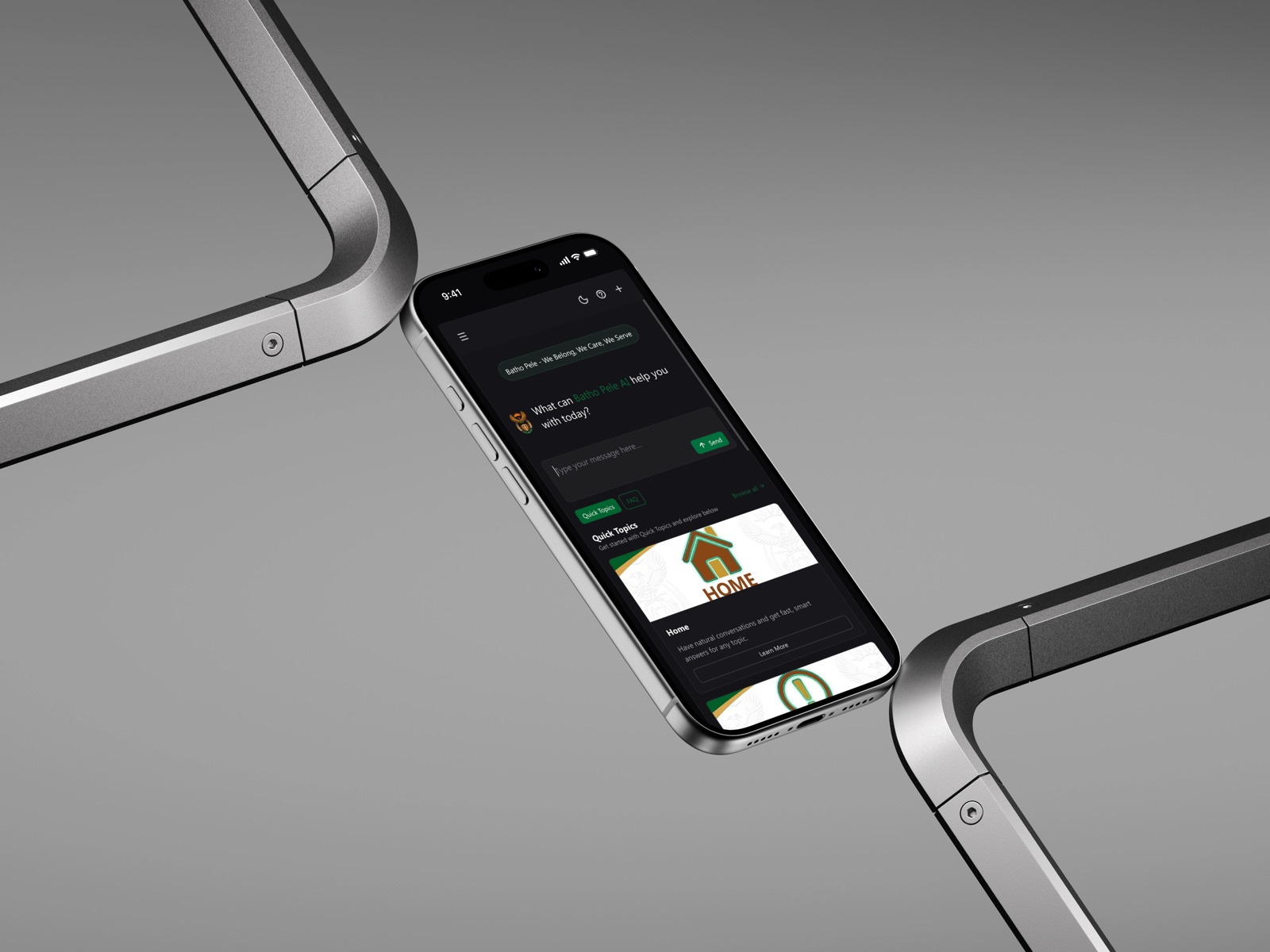
The result is a single knowledge assistant that stands in for a website and hundreds of scattered PDFs — grounded in retrieval so every answer traces back to a real source, and marked with a confidence & accuracy indicator so no one has to take it on faith. Staff and the public now ask the same assistant the same way, and get sourced answers back in seconds, not searches.